
A Walk Into Tokyo’s Past
Asakusa feels like a gentle step back in time — not in a museum-like way, but in a lived-in way. This is where Tokyo’s traditions aren’t just preserved; they’re part of everyday life. You’ll see locals in kimono heading to temples, rickshaw pullers weaving through narrow streets, and shopkeepers who’ve been selling the same snacks for generations.
Despite its historic roots, Asakusa never feels frozen. It’s lively, welcoming, and full of small moments — the smell of incense drifting through the air, the sound of wooden sandals on stone paths, the hum of conversation from old izakayas as evening sets in. If Tokyo had a soul you could walk through, Asakusa would be one of the best places to find it.
It’s also one of the most beginner-friendly areas in the city. Flat streets, clear landmarks, great transport connections, and a relaxed pace make it easy to explore — whether it’s your first day in Japan or your tenth visit.
Top Attractions in Asakusa
Sensō-ji Temple – Tokyo’s Most Iconic Temple
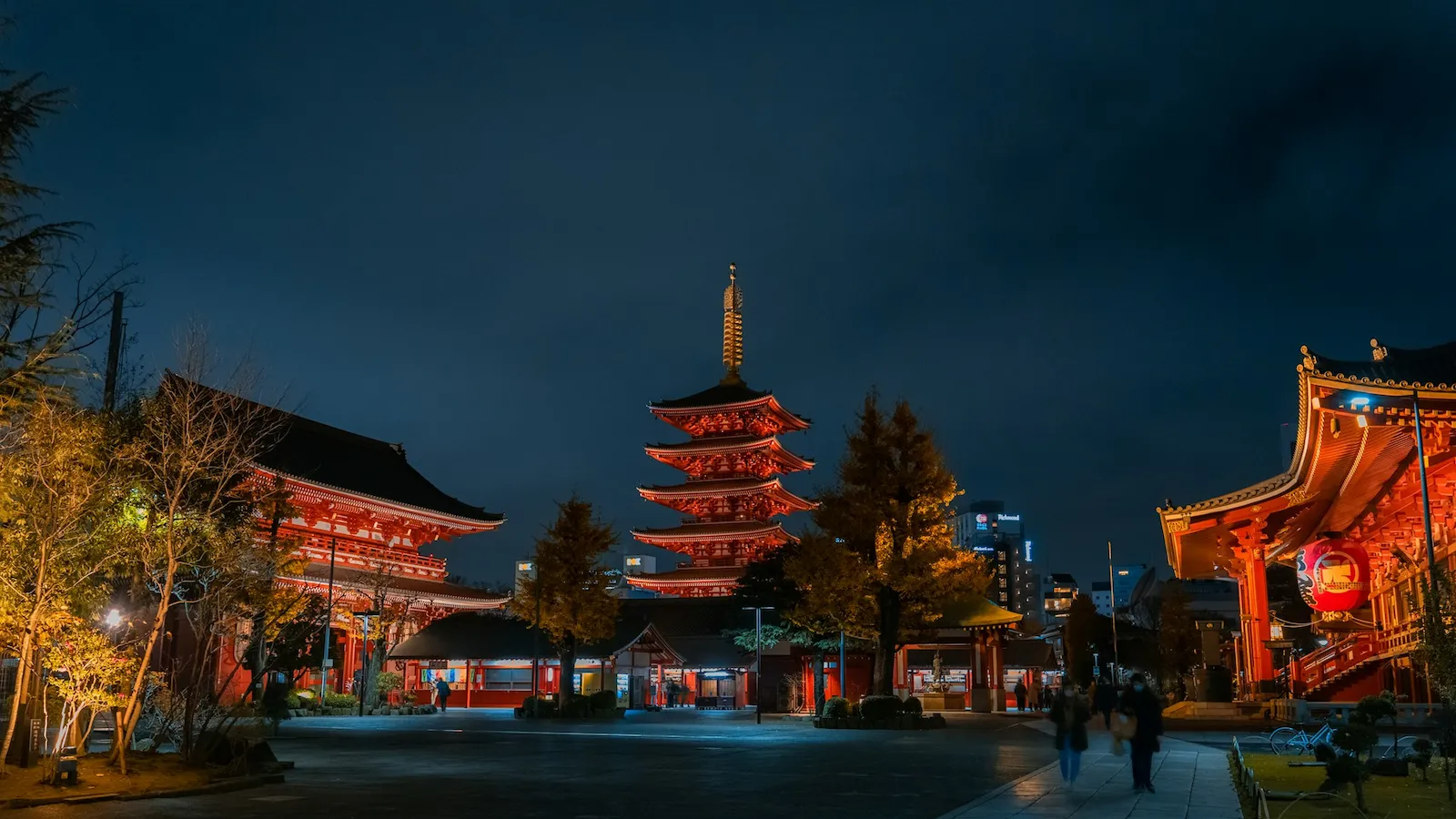
Sensō-ji is the heart of Asakusa and one of Tokyo’s most important landmarks. Walking through the Kaminarimon (Thunder Gate) instantly sets the tone, with its massive red lantern welcoming visitors from all over the world.
The approach to the temple, Nakamise Street, is lined with traditional snack stalls and souvenir shops selling everything from rice crackers to handcrafted fans. It’s busy, yes — but it’s also part of the experience. Arrive early in the morning or later in the evening if you want to see the temple in a calmer, more atmospheric light.
Inside the grounds, you’ll see people wafting incense for good health, drawing fortune slips, and offering prayers — a reminder that this is a functioning place of worship, not just a photo stop.
Nakamise Street – Snacks, Souvenirs & Street Life
Nakamise Street is one of Tokyo’s oldest shopping streets, and it hasn’t lost its charm. This is the place to sample classic Japanese snacks like ningyo-yaki (small sponge cakes), freshly grilled rice crackers, and sweet treats filled with red bean paste.
It’s touristy, but in a good way — lively, colorful, and rooted in tradition. Even if you don’t buy anything, it’s worth walking through slowly and soaking in the energy.
Sumida River & Riverside Walks
Just a short walk from Sensō-ji, the Sumida River offers a completely different side of Asakusa. The riverside paths are perfect for a relaxed stroll, especially during cherry blossom season or at sunset.
You can also hop on a river cruise here, connecting Asakusa with areas like Hamarikyu or Odaiba — a scenic and surprisingly peaceful way to see Tokyo from the water.
Rickshaw Rides – Old-World Transport, Modern Flair
One of Asakusa’s most iconic sights is the rickshaw pullers, dressed in traditional attire and moving swiftly through the streets with impressive strength and skill. A ride isn’t just transport — it’s a guided experience, often filled with local stories, history, and humor.
Even if you don’t take a ride, watching them navigate the streets is part of the Asakusa atmosphere.
What to Eat in Asakusa
Asakusa is a fantastic place to try traditional Japanese food, especially dishes that have stood the test of time.
- Tempura – Asakusa is known for classic tempura restaurants, many of which have been around for decades.
- Unagi (eel) – A specialty in the area, often served over rice with a rich, savory sauce.
- Ramen & soba – You’ll find simple, no-frills noodle shops that focus on flavor over presentation.
- Hoppy Street – A lively alley filled with casual eateries and izakayas, famous for its local atmosphere and affordable drinks.
Hoppy Street is especially fun in the evening, when locals gather after work and the area takes on a friendly, neighborhood vibe. It’s social, slightly chaotic, and very Asakusa.
How to Get to Asakusa
Asakusa is extremely well connected, which makes it an excellent base for exploring Tokyo.
Major Train Lines
- Tokyo Metro Ginza Line – Direct access from Ueno, Ginza, and Shibuya
- Toei Asakusa Line – Connects directly to both Haneda Airport and Narita Airport (no transfers needed in many cases)
- Tobu Skytree Line – Easy access to Tokyo Skytree and northern Tokyo
This direct airport connectivity is a huge advantage, especially if you’re arriving late or leaving early.
Where to Stay & How Long
Asakusa is ideal for travelers who want a calm, culturally rich area without sacrificing convenience. Accommodation options range from traditional ryokans to modern budget hotels and stylish boutique stays.
Recommended stay:
Spend 3–4 days here if you want to explore at a relaxed pace. It’s a great base for nearby areas like Ueno, Skytree, and even day trips outside central Tokyo.
Why Asakusa Belongs on Every Tokyo Itinerary
Asakusa isn’t about chasing the latest trend or the tallest building. It’s about slowing down just enough to notice the details — the rituals, the history, the quiet pride of a neighborhood that knows exactly who it is.
If modern Tokyo is a city rushing toward the future, Asakusa is the place that reminds you where it came from. And honestly, that balance is what makes Tokyo so special.